


TORN
4.42.86K Reviews
App Specs
- Version
- 2.3.37
- Updated On
- License
- Free
- Downloads
- 1,000,000+
- Developer
- TORN LTD
- Categories
- Role Playing
- Platform
- Android
Screenshots
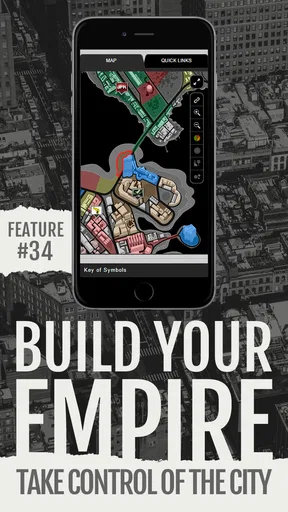
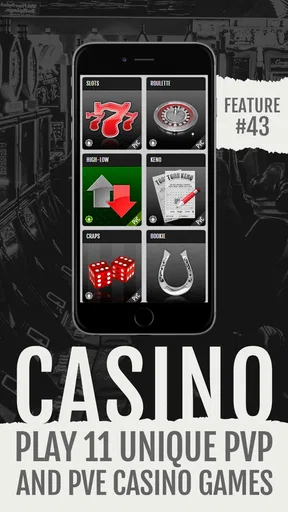
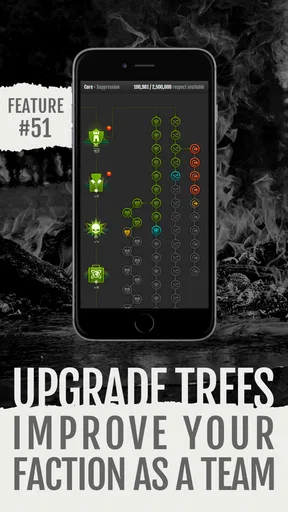
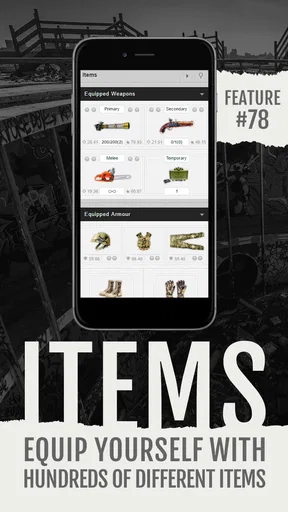

 Analysis by AppCompare
I approached TORN expecting a text-heavy crime role-playing game, and that is exactly where its appeal lies. Instead of relying on animated battles or a large visual map, it asks me to make decisions through menus, messages, jobs, training, travel and player interaction. The result feels closer to managing a criminal life inside a persistent online city than playing a conventional mobile adventure.
That style will not suit everyone. If you want quick rounds, constant visual action or a story that moves forward at your pace, this can feel slow and surprisingly demanding. If you enjoy long-term progression, social competition and checking in to make deliberate choices, it has much more to offer. I found that the most important adjustment was accepting that progress is measured in routines rather than dramatic scenes.
TORN is a free role-playing game from TORN LTD, aimed at a mature audience with a 17+ content rating. It has built a substantial player base, with over one million installs, a 4.5 average from around twenty thousand ratings, and roughly 2.9 thousand written reviews. Those figures suggest a healthy audience, but they do not remove the learning curve. The game is welcoming enough to start, yet deep enough that the first few sessions can feel like learning a new online hobby.
Getting oriented in a text-based crime city
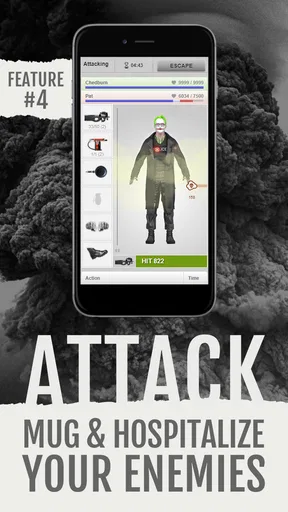
The first thing I noticed is that the interface does not try to disguise its numbers. Health, energy, nerve, money, activity choices and progression are presented as practical information, not decorative extras. That makes the game easier to understand once I stopped looking for a traditional action-game loop. My job was not to steer a character through a level; it was to decide how to spend limited opportunities and then return later to make the next decision.
The city’s crime theme shapes nearly every early choice. I could think about earning cash, improving my character, interacting with other players and becoming more useful to a group. The clan element matters because the world is not designed as a purely private campaign. Other players create pressure, help, rivalry and unpredictability. Even when I was playing alone, the sense that the city continued around me made ordinary actions feel more meaningful.
This is an old-school massively multiplayer text RPG, so patience is part of the design rather than an accidental inconvenience. The game rewards people who enjoy planning a sequence: choose an action, wait for its result, use the outcome intelligently and return when another resource is ready. I would not install it expecting to finish a complete adventure during a short commute. I would install it if I wanted a persistent character to revisit throughout the day.
Compared with a typical mobile role-playing game, TORN uses fewer visual rewards and gives me more responsibility for interpreting the situation. Compared with an idle game, it offers more social context and more decisions. Compared with a crime-themed action game, it is much less immediate but considerably more focused on long-term consequences and player relationships.
Worth Reading Before You Choose

EA SPORTS FC Mobile 26 Is a Bigger Football Game, but It Takes Time

Flipboard Shows What News Apps Must Do Beyond the Feed

Switching to Android Auto Means Rethinking Your Driving Routine

Google Calendar Makes a Crowded Week Easier to Manage

Ludo King Makes the Most of the Minutes Between Plans

Baby Panda World Brings Quick Play to Modern Phones, but Its Game Library Feels Busy
The first setup is simple, but the mindset matters
The current version is 2.3.37, and the game supports devices running Android 6.0 or later. Once installed, I would recommend beginning with a quiet few minutes rather than rushing through the opening screens. Read the labels around each action and notice which choices consume resources, which ones improve the character and which ones simply provide information. That small pause prevents the most common beginner mistake: spending everything immediately because the option looks available.
I also recommend deciding what kind of player you want to be before trying to optimize every number. You can approach the city as someone interested in making money, building personal strength, learning the social side or simply exploring the systems. A first-time player who tries to copy an advanced strategy without understanding the purpose of each resource is likely to feel lost. A modest personal goal is more useful, such as improving one area and learning how the daily rhythm works.
The free entry point makes experimentation comfortable, but the game includes in-app purchases ranging from $1.49 to $194.99 per item. That is worth keeping in mind before becoming heavily invested. I would play the opening without buying anything, learn which parts of the routine I actually enjoy and only then decide whether spending money adds value for me. The existence of expensive purchase options is not automatically a problem, but it means I would set a personal limit before the game becomes part of my daily routine.
Another useful setup habit is to keep expectations realistic about time. TORN is better approached as a game I revisit than one I binge for a single evening. When I treated every action as something that had to produce an immediate payoff, the pacing felt restrictive. When I treated the game as a continuing account with several small decisions waiting for me, the same pacing became part of the appeal.
Finding the first meaningful success
For a new player, a meaningful first success is not becoming powerful overnight. It is completing an action, understanding what changed and using that result to make a better next choice. I found that the best early workflow was deliberately narrow: choose one available activity, check its cost, complete it, inspect the result and then decide whether to repeat it or switch direction.
That approach sounds basic, but it prevents a lot of confusion. Text RPGs can present several tempting routes at once, and the game does not need flashy combat to create decision pressure. I learned more by following one thread long enough to see its effect than by opening every menu and making scattered choices. The first time I felt properly in control was when I could explain why I was taking an action, not merely because it was highlighted.
A practical everyday scenario makes the rhythm clearer. Imagine opening the game before work, choosing an action that fits your current resources and then closing it rather than waiting impatiently. Later, during a break, you can review the outcome, make a second decision and check messages or social activity. In the evening, you can spend more time thinking about progression or clan-related interaction. This pattern suits TORN far better than trying to force it into a five-minute arcade session.
One non-obvious lesson is that a failed or unimpressive result can still be useful if it teaches you the cost of an action. I stopped judging progress only by money or visible improvement. Learning which choices drain a resource too quickly, or which activities do not fit my current plan, helped me avoid repeating inefficient routines. In a game built around gradual development, information is part of the reward.
Another strong beginner tip is to keep a simple mental record of what you are testing. You do not need a spreadsheet, but remembering your last action and its purpose makes the next login more productive. Without that context, the game can feel like a collection of disconnected buttons. With it, each visit becomes the next step in a plan.
Why the social layer changes the experience
TORN is more interesting when I remember that its city is shared. Clans are not just a decorative label; they give the game a reason to care about other players. Cooperation can make the world feel more alive, while competition can make an otherwise routine decision feel risky. The social side also gives long-term players something to work toward beyond personal statistics.
For a newcomer, I would avoid treating every experienced player as an opponent. Observe how people communicate, learn the tone of the community and ask focused questions when you genuinely do not understand a system. A clear question about an action or progression route is more useful than asking someone to explain the entire game. This is one of the places where TORN differs from a solitary role-playing title: learning from people can be as valuable as learning from menus.
The trade-off is that a persistent multiplayer world can be less forgiving than a single-player campaign. Other players may progress faster, make choices I do not expect or create social situations that cannot be paused and rewritten. Someone who dislikes competition, asynchronous interaction or the feeling of being behind may prefer a conventional offline RPG. TORN is strongest when that shared pressure sounds motivating rather than stressful.
I also found that social involvement should grow gradually. Joining every conversation or trying to understand every group immediately can distract from the basic economy of the character. First learn how your own actions work. Then use social features to support a direction you already understand. That order makes the multiplayer layer feel helpful instead of overwhelming.
Common confusion around progress and resources
The biggest source of confusion is the difference between having an action available and having the right reason to take it. A button can be tempting simply because it is visible, but visibility is not the same as efficiency. Before acting, I now ask three questions: what will this consume, what am I trying to improve and what will I do after the result?
New players may also wonder why progress feels uneven. In a conventional RPG, completing a quest often produces a clear burst of advancement. Here, improvement can be spread across several small choices. One login may be about earning, another about training or preparation, and another about interacting with the wider city. The experience becomes clearer when I judge a day by whether my plan moved forward, not whether I received a dramatic reward.
Money can create another trap. Because the game is built around crime, cash and clans, it is natural to focus on immediate income. Yet a short-term gain is not always the best use of a character’s time or resources. I found it more helpful to connect earning with a purpose: saving for a planned step, supporting a chosen development path or giving myself room to experiment. Cash without a plan disappears quickly and teaches very little.
The purchase system deserves a calm approach too. Free access lets you discover the core loop, while optional items can make spending feel attractive when progress slows. I would not buy simply because I felt impatient. First identify whether the problem is genuinely a missing resource or merely unfamiliarity with the game’s pacing. Many early frustrations came from not understanding the routine, and a purchase would not have solved that.
There is also a difference between being active and being effective. Checking the game repeatedly does not automatically create better progress. A short visit with a clear intention can be more valuable than constant tapping. This is an important trade-off for people who are prone to turning every notification into a task: TORN works best when it supports your schedule rather than taking it over.
Who will enjoy it, and who should choose something else
I would recommend TORN to players who like persistent characters, resource decisions, text-driven interfaces and online communities. It is particularly suitable for someone who enjoys checking a game several times across a day, making small strategic choices and watching a long-term identity develop. Fans of older browser-style RPGs may feel at home quickly because the interface puts systems and consequences ahead of spectacle.
I would be more cautious recommending it to someone who wants a guided story with memorable cinematic scenes. The crime setting is clear, but the experience is not built around a traditional sequence of authored missions that constantly tells you what to feel or where to go. Players who need immediate action, polished animation or a strong offline mode should look toward a more conventional mobile RPG instead.
It may also be a poor fit if you dislike waiting for progression or comparing your development with other people. TORN asks you to accept gradual improvement and an evolving online environment. That can be satisfying, but it can also make the game feel like another obligation if you already have too many daily systems competing for attention.
On the other hand, the lack of visual overload is a genuine strength. I could focus on decisions without needing a powerful device or a large uninterrupted block of time. The text-based presentation also leaves room for imagination. The city is not fully drawn for me, so the meaning comes from the choices, numbers and conversations rather than from expensive presentation.
Building a sustainable routine after the first session
Once the opening confusion fades, I suggest choosing one main direction for a while instead of trying to master every part of the city. You can still explore, but a central goal gives your actions a reason. For example, you might focus on improving your personal capability, building financial stability or becoming more involved with a clan. The point is not to find one universally correct path; it is to make your next decision easier.
A useful advanced habit is to separate maintenance from experimentation. Maintenance means taking the reliable actions that support your current plan. Experimentation means trying something unfamiliar and accepting that it may be less efficient. Mixing the two without noticing can make it hard to tell what worked. I prefer to experiment when I have enough room to absorb a poor result, then return to a dependable routine afterward.
I would also review the character’s direction every few sessions. A strategy that made sense at the beginning may become less attractive once I understand the costs and rewards. Because this is a continuing multiplayer game, there is value in adapting rather than stubbornly following the first plan I made. That flexibility is one of the deeper skills TORN develops.
Notifications and frequent check-ins should be handled according to your own habits. If you enjoy a game that quietly waits for you, the structure can fit well. If you feel compelled to respond to every available action, create boundaries from the start. Play at times that suit you, and do not confuse constant availability with required participation. My best sessions were the ones where I opened the game with a purpose and left after completing it.
My final recommendation for a first-time player
TORN is a specialized role-playing game, and its strengths become visible only after I stop comparing it with action-heavy mobile titles. It offers a persistent crime-themed world, a strong emphasis on decisions and a social layer that gives long-term progress extra meaning. The free price makes it easy to test, while the mature rating and optional purchases are reasons to approach it with awareness rather than blindly committing.
My advice is to install it, take the opening slowly and aim for understanding instead of rapid advancement. Complete one meaningful action, inspect its consequences and build a routine around the resources you actually have. Do not spend money until you know what kind of player you are in this world. Do not join the social side merely because it exists; use it when it supports a direction you understand.
After that first successful cycle, the question is simple: did you enjoy making a small decision and returning later to see how it shaped your character? If yes, TORN can become an unusually absorbing companion game. If you wanted immediate action or a self-contained story, choosing a different role-playing experience would be wiser. Its real appeal is not spectacle but the feeling that careful choices gradually create a place for you in a living online city.
Pros
- Fast-paced battles that keep matches engaging and replayable.
- Distinct heroes offer varied playstyles and team combinations.
- Competitive modes provide clear goals for dedicated players.
- Bright visuals make characters and combat effects easy to follow.
- Frequent rewards help maintain progress between matches.
Cons
- Matchmaking can feel uneven when experienced players face newcomers.
- Some upgrades may require considerable time or repeated play.
- The interface can feel crowded on smaller phone screens.
- Online play depends heavily on a stable internet connection.
- Combat may become repetitive after extended sessions.
FAQs for TORN
What is TORN and what can I do in the game?
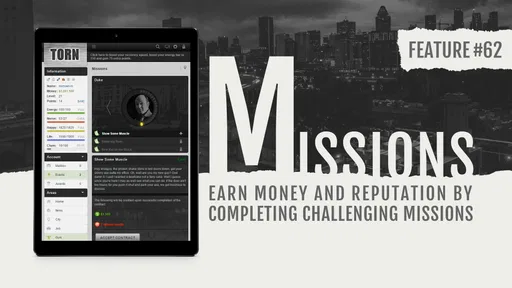
TORN is a text-based online role-playing game set in a persistent cyberpunk-style city. After creating a character, you can build your statistics, work different jobs, join factions or companies, trade items, buy property, fight other players, complete missions, and develop your own criminal or business career. Progress is largely player-driven, so the experience depends on the choices you make and the community you interact with.
Is TORN free to download and play?
Yes, TORN can be played for free, allowing you to create a character and access the main gameplay systems without paying an upfront purchase price. However, the game includes optional premium features and purchases that may provide convenience or additional benefits. You do not need to spend money to understand the game, but progress can feel slow at times because many actions depend on timers and long-term planning.
Does TORN require an internet connection?
Yes. TORN is an online multiplayer game built around a persistent world, live markets, player interaction, battles, messages, and server-based progression. You need an active internet connection to log in, perform most actions, collect results, communicate with other players, and keep track of changing events. It is not designed as an offline game, so access may be limited when your connection is unstable.
Is TORN suitable for children and younger players?
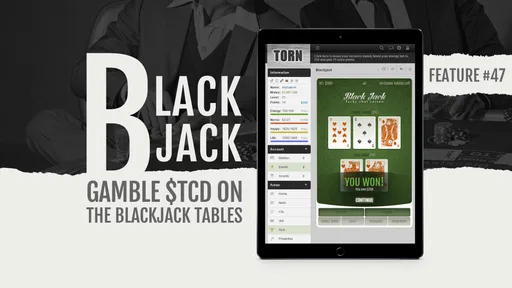
TORN is generally aimed at mature players because its setting includes crime, violence, drugs, gambling-style activities, theft, and other adult themes. The game also contains communication between players, and some conversations or user-generated content may not be appropriate for children. Parents should review the platform’s age rating, privacy settings, and purchase controls before allowing a younger player to create an account.
Can I play TORN on both Android and iOS, and does progress sync?
TORN is available through mobile platforms and can also be accessed through its web-based game environment. Your character and progress are linked to your TORN account rather than being stored only on one phone, so you can normally continue playing when switching between supported devices. Make sure you sign in with the same account details, and avoid creating separate accounts if you want to keep one continuous character.


